
G.J. Gardner Homes NZ - Cut Design Iterations in Half with VR for Home Builders
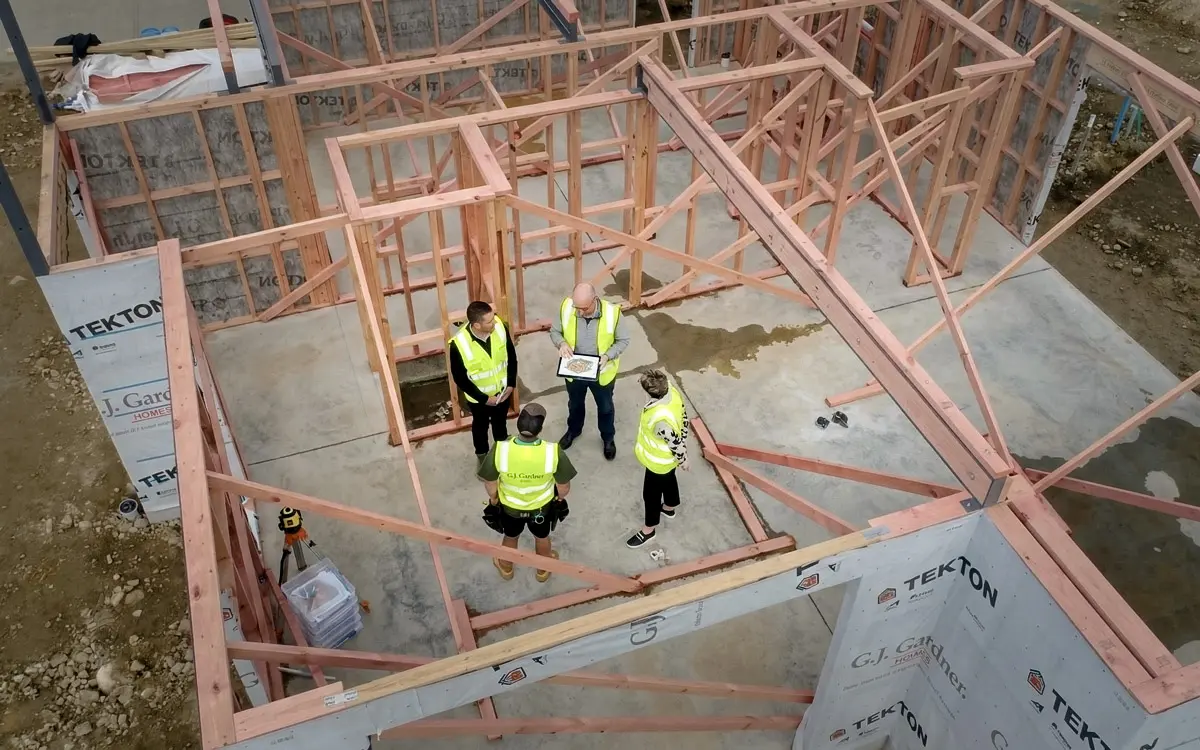
The biggest feedback we hear is: 'Why hasn't everyone else got this?'
New Zealand's Largest Home Builder Needed a Better Way to Sell Homes Before Construction
G.J. Gardner Homes is New Zealand's largest home builder, operating through a network of locally owned and operated franchises. Their business model is built on volume, variety, and trust — and for years, that meant relying on floor plans, physical display homes, and the expertise of sales consultants to help customers make one of the biggest purchasing decisions of their lives.
But as customer expectations evolved, a familiar tension began to surface. Buyers were struggling to translate a two-dimensional floor plan into a lived experience. Sales consultants were spending enormous time and energy helping customers visualise what their future home would actually look, feel, and flow like — often only for those customers to request significant changes late in the build process.
For a franchise network operating at scale, those late-stage design changes weren't just frustrating. They were costly.
The Challenge: Customers Struggling to Visualise Floor Plans
Most home buyers aren't architects. Asking them to mentally rotate a floor plan, imagine ceiling heights, or anticipate how natural light will move through a space is asking a lot — and the consequences of getting it wrong land squarely on the builder.
For G.J. Gardner Homes NZ, the absence of effective visualisation tools meant:
- Customers making selections they later regretted once framing began
- Design consultants fielding change requests mid-build
- Delays, rework, and margin erosion across the franchise network
- Overreliance on physical display homes — expensive to build, maintain, and limited in range
With dozens of concept home designs across multiple ranges — from compact townhouse solutions to sprawling family homes — maintaining a full suite of display homes was neither practical nor scalable. Like many home builders adopting new sales technology, the team needed a solution that could showcase their entire range, anywhere, anytime.

The Solution: New Zealand's First Virtual Home Catalogue
G.J. Gardner Homes NZ partnered with Enviz to build what became New Zealand's first virtual home catalogue — a fully immersive, device-agnostic library of 3D virtual walkthroughs spanning their entire concept range.
Instead of asking customers to interpret a floor plan, sales consultants could now invite them to step inside any home in the range — on a tablet, a desktop browser, or a VR headset — before a single piece of timber had been laid.
The Enviz platform gave G.J. Gardner Homes NZ:
- A comprehensive virtual model home software solution covering every concept in their range
- Immersive 3D walkthroughs accessible across devices, from iPads in the sales office to headsets at expos
- Guided viewing tools, allowing sales consultants to lead customers through a home in real time
- A scalable alternative to physical display homes — no ongoing maintenance, no geographic limitation
Each space is built from architectural design files by Enviz's team of specialist 3D artists — learn more about how Enviz works with designers to bring home concepts to life.

Rather than sending customers away to browse brochures, sales consultants could hand them a tablet and invite them to step inside any home in the range — right there in the sales office or at an expo.

The Results: Fewer Design Changes, Faster Builds, Lower Costs
The impact was immediate — and it showed up in the metrics that matter most to a franchise home builder.
Shorter Sales Cycles
When customers can walk through a home before they buy it, decision-making accelerates. Sales consultants reported that buyers arrived at selection appointments with greater clarity and confidence — spending less time deliberating and more time committing. The virtual walkthrough did much of the selling before the conversation even started.
Fewer Late-Stage Design Changes
This was the headline result. By helping customers genuinely visualise their future home — room proportions, ceiling heights, material finishes — G.J. Gardner Homes NZ saw a significant reduction in change requests after contracts were signed. Customers knew what they were getting. And what they were getting matched what they'd imagined.
The downstream effect on construction timelines and project costs was substantial. Fewer variations meant fewer delays, fewer contractor disruptions, and better margin protection across the franchise network.
A Powerful Point of Differentiation
In a competitive market, being first matters. G.J. Gardner Homes NZ were the first builder in New Zealand to offer a fully immersive virtual home catalogue — and the feedback from customers was immediate.
"The biggest feedback we hear is: 'Why hasn't everyone else got this?'" — Grant Robinson, Franchise Owner
For franchise owners, Enviz became more than a visualisation tool. It became a core part of their sales process — and it's easy to see why home builders love what Enviz makes possible. A tangible demonstration of innovation that set them apart from competitors at every touchpoint, from sales offices to property expos.

Leading the Market Through Better Customer Experience
The G.J. Gardner Homes NZ story is a blueprint for what's possible when a home builder commits to giving customers a genuinely better experience.
VR for home builders isn't a gimmick. It's a commercial tool — one that reduces friction in the sales process, protects build margins, and creates the kind of confident, committed buyers that make construction projects run smoother from start to finish.
For G.J. Gardner Homes NZ, the question is no longer whether immersive technology belongs in the sales process. It's how to keep extending its lead.
Interested in how Enviz can help your building business reduce design changes, shorten your sales cycle, and sell homes before construction begins? Get in touch.


